

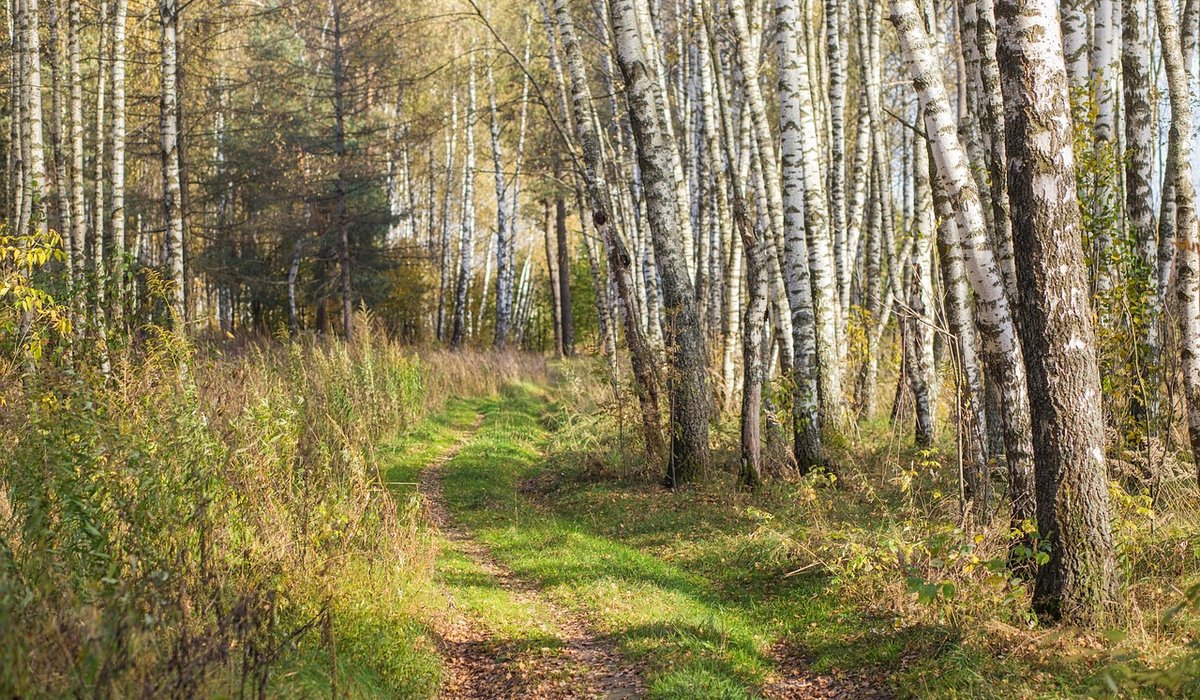
Come January, a British wood can feel like a room full of strangers. The leaves are gone, the undergrowth has collapsed, and every trunk seems to be the same shade of grey-brown. Then you spot a smooth silver column standing apart from the fissured crowd, and the whole place becomes legible again.
Bark is one of the most dependable identification tools we have. Leaves are seasonal and often high overhead, twigs are fiddly, and buds demand close work. Bark sits at eye level all year round and rewards a slow wander. Learn half a dozen trees and you will start reading a wood the way you read a familiar street — knowing what is coming before you reach it.
Bark identification becomes much easier when you break it into three questions, and ask them in the same order every time.
Conditions change what you see. Damp days deepen the colour and make ridges stand out; low winter sun rakes across the trunk and turns every crack into a shadow. Algae often gives a green wash on the damper side of a tree, and moss gathers in the crevices, but do not treat that as a compass — it is a clue, not a rule.
Bare months are the best time to learn bark, because nothing else is competing for your attention. Take your time, and use two extra clues to confirm a suspicion. Buds are the reliable back-up: oak buds cluster at the tips, ash buds are sooty black, beech buds are long, slim and pointed, and sycamore buds sit in opposite pairs. Fallen twigs on the path are free practice.
Also look at the base of the trunk. Elm often flares into fluted ridges, alder likes wet ground and dark fissured bark, and the deadwood of a fallen branch shows the same patterns as the living tree without any risk of damaging it.
Spring brings darker, rain-soaked bark and the first green haze overhead, which helps you place a tree in context. Summer hides much of it in shade, though the trunk still reads clearly on a walk. Autumn is the great shortcut: leaf litter under a tree tells you what you are standing beside, and the bark then confirms it.
Then winter returns and the wood simplifies again. Revisit the same handful of trees through the year and you will learn them far faster than trying to memorise a dozen new species each outing.
Start with oak, ash, beech and birch — four trees that will cover a great many of your walks — and add a new one each season. Within a year, the winter wood will feel like a place full of familiar faces.

The Amberbirch Real stories, useful guides and the occasional recommendation, all in one calm corner of the web.

The Amberbirch An honest, everyday look at the things that make life a little better — with advice you can actually use.

Discover how to forage safely and sustainably by learning plant identification, respecting protected species and leaving enough for wildlife to enjoy.

Comments
ALina Kelian
19th May 2018 ReplyThe Amberbirch Real stories, useful guides and the occasional recommendation, all in one calm corner of the web. ullamco laboris nisi ut aliquip ex ea commodo consequat.
Rlex Kelian
19th May 2018 ReplyThe Amberbirch An honest, everyday look at the things that make life a little better — with advice you can actually use. ullamco laboris nisi ut aliquip commodo.
Roboto Alex
21th May 2018 ReplyThe Amberbirch An honest, everyday look at the things that make life a little better — with advice you can actually use. ullamco laboris nisi ut aliquip ex ea commodo consequat.